
 Svenska
 Dansk
Dansk
 Deutsch
 Français
 Español
 Suomi
Suomi
 Norsk
Norsk
 Nederlands
 10 facts about Coleus
 5 accessory tips for coleus
 Blue coleus
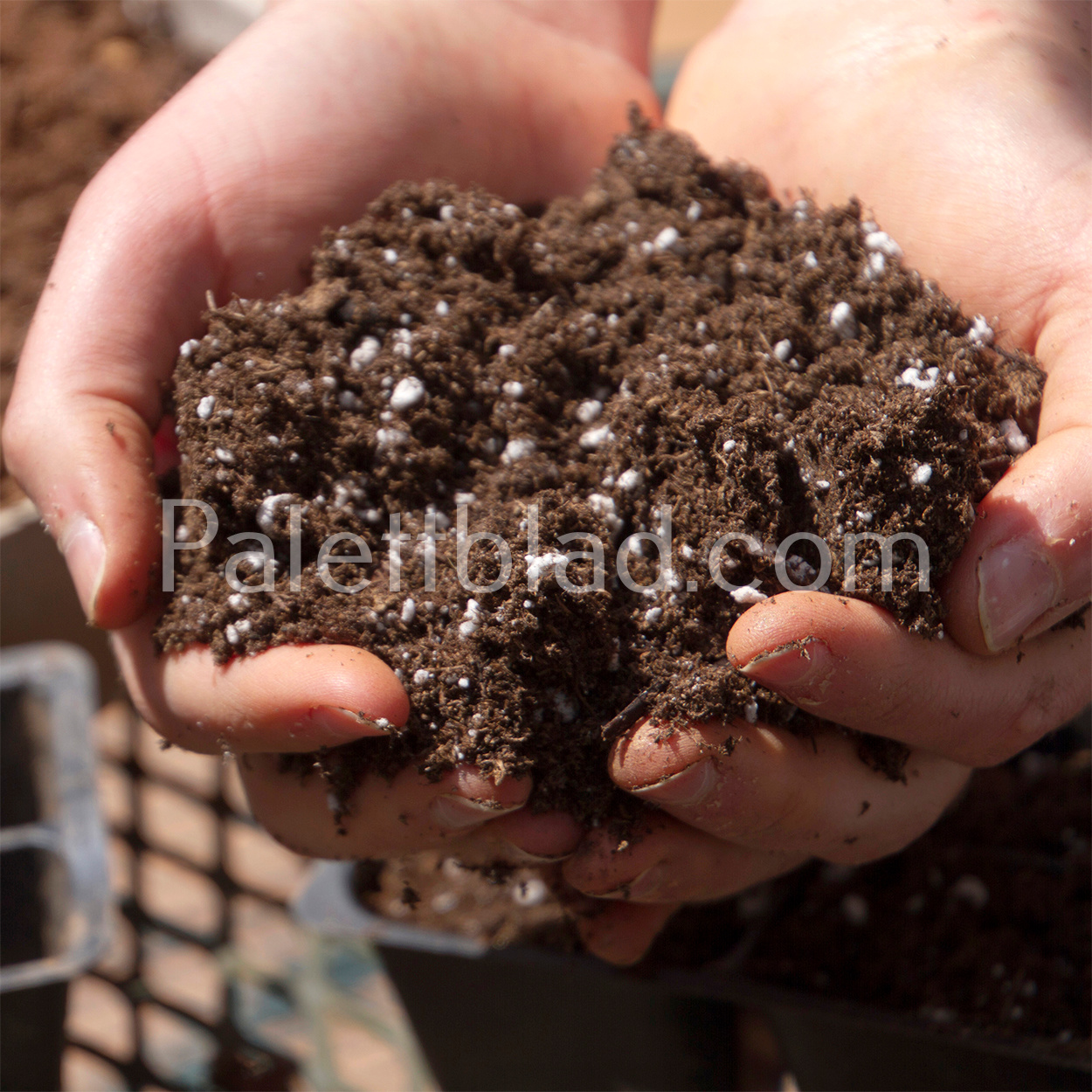 Soil for coleus
 How to trim coleus plants
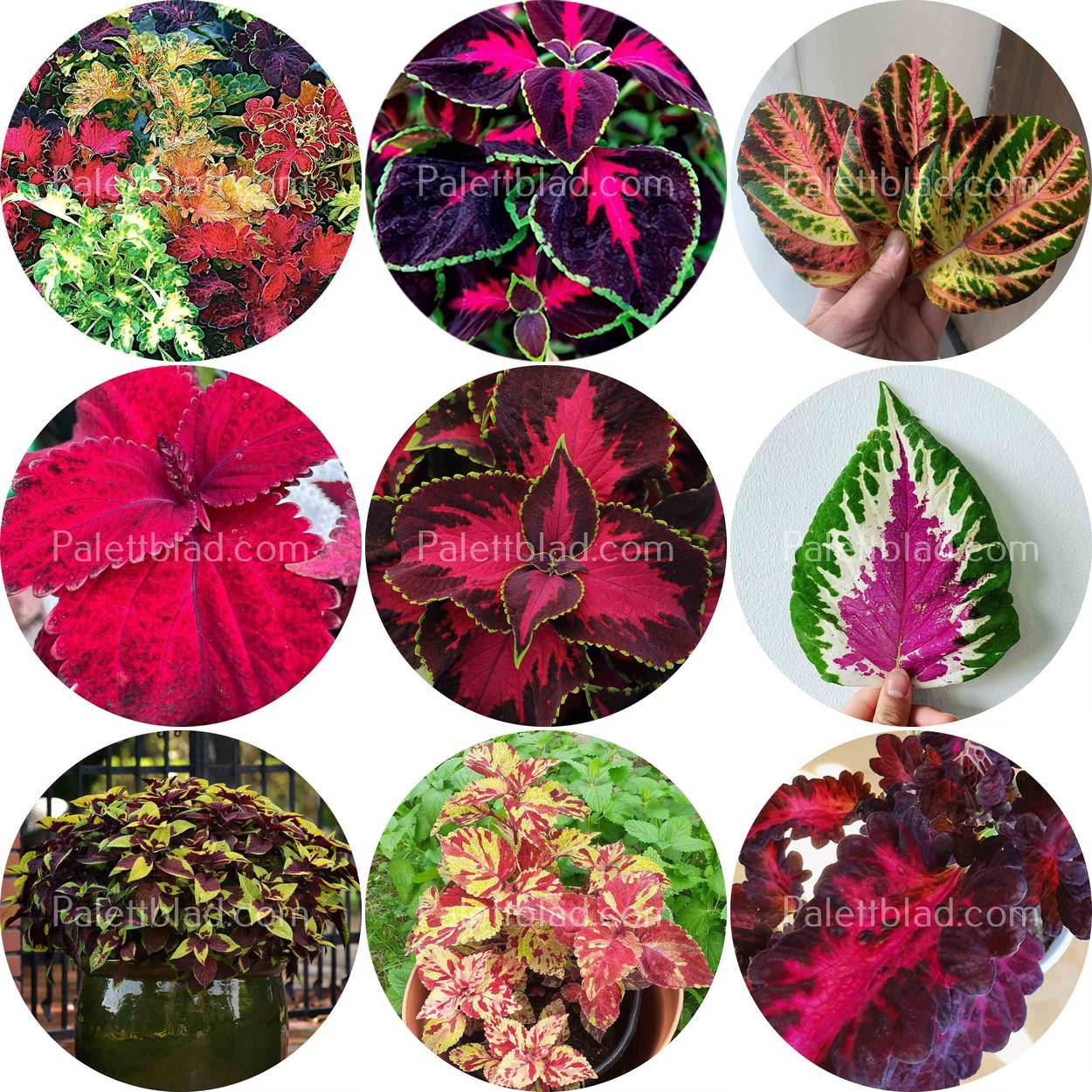 Rare coleus
 Coleus seeds
 Coleus varieties
 Coleus outdoors
 Coleus during the winter
 How to grow coleus plants from seeds
 Are coleus toxic to cats?
Cart
Your cart is empty, but doesn't have to be..
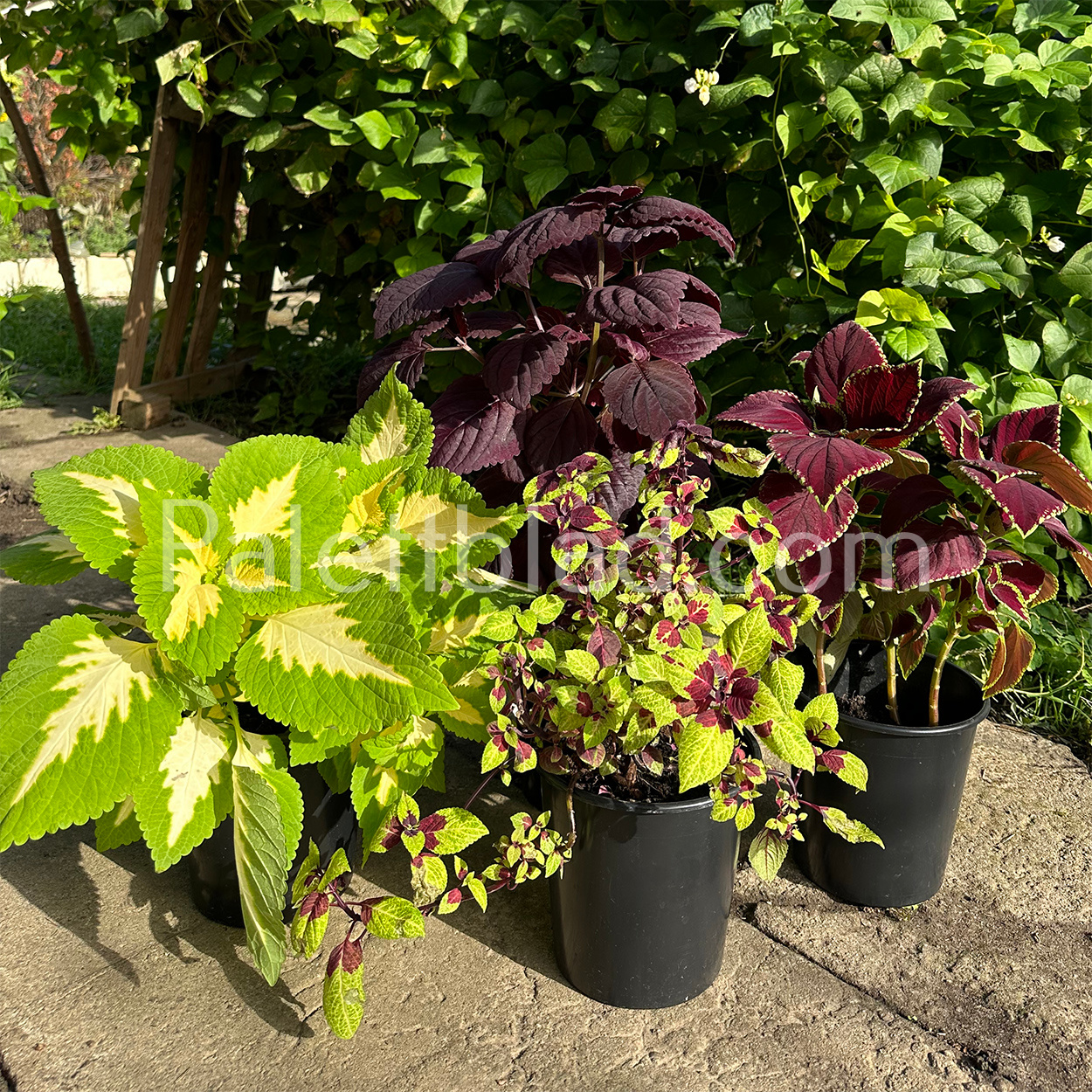
Coleus are among the most rewarding plants you can grow. They grow fast, the colors are unmatched, and they forgive almost anything. But a few things make the difference between a scraggly stick and a dense, bushy plant bursting with color.
Coleus like it bright, but most varieties scorch in strong midday sun. The ideal is partial shade where the plant gets morning and evening sun but stands protected in the middle of the day. Good light gives the most intense colors. In too dark a spot, the colors turn darker and more muted and the plant easily gets leggy. Some series (such as Premium Sun) are bred for sunny spots and handle full sun better than other coleus. Turn the pot regularly, so the plant grows evenly in all directions instead of leaning toward the light.
Coleus want even moisture but should never sit in wet soil. If you are unsure, it is better to wait a day than to water once too often. When they dry out, they are dramatic. The whole plant droops like a wet rag, but usually stands back up within an hour of watering. Let the surface dry out between waterings and make sure the pot drains. A simple test is to lift the pot. If it feels light, it is time to water. If it feels heavy, you can wait. Watch out for the root rot trap. If the plant droops even though the soil is wet, it is rot and not thirst, and more water only makes things worse.
Coleus want airy, porous, well-drained soil. Feel free to mix the soil with perlite and put Leca balls in the bottom of the pot. A clay pot with a drainage hole and saucer is essential, since the clay pot breathes and the soil gets more air. You'll find the accessories we use ourselves in 5 accessory tips for coleus. And don't skimp on pot size – a bigger pot gives a bigger plant. In a big pot the soil takes longer to dry out, so water by feel instead of by schedule. More about soil, pot choice and repotting in Soil for coleus.
With feeding, weak and often beats strong and rarely. We water with a weak dose of liquid plant food (Formulex) at practically every watering during the growing season. If you would rather not mix plant food at every watering, feeding every one to two weeks works too. But keep the dose weak. Too much plant food actually dulls the leaf colors. In winter the plant rests and needs no extra feeding.
Want a big, full plant fast? Plant two or three cuttings in the same pot from the start. Together they fill out the pot faster and look like one big, dense plant.
Coleus need pinching to become dense and bushy. Pinch or cut off the top shoot above a leaf pair once the plant has 3–4 leaf pairs. New shoots emerge from the leaf axils just below the cut, so one pinch doubles the number of branches. Repeat on the new shoots once they have a couple of leaf pairs. If you want an even denser, bushier plant, you'll find it all in our guide How to trim coleus plants.
When coleus flower, the plant puts its energy into blooming instead of leaves, and many varieties get leggy. Pinch off the flower buds as soon as they appear. Feel free to cut two leaf pairs below the bud, so the plant branches there instead. If you prevent flowering, the colors last longer.
Once nights stay reliably above about 10 °C, coleus thrive outdoors in pots, flower boxes or beds, preferably in a sheltered spot.
Come autumn, when nights get colder, it is time to act. Don't wait for the first frost. Our advice is to take cuttings and overwinter small plants instead of bringing in the big ones. Plants that have stood outside all summer easily carry pests indoors, and from there the infestations spread to the other plants on the windowsill. Still want to save a whole plant you can't part with? Shower it thoroughly, inspect it closely (don't forget the undersides of the leaves) and keep it in quarantine in a separate room for one to two weeks before it joins the others. The full outdoor guide is in Coleus outdoors.
Give the plant as much light as possible (preferably under a grow light) and keep it no colder than about 10 °C. Water far more sparingly than in summer. Stick a finger into the soil before watering – it should have dried out. Avoid the spot right above a hot radiator, since dry rising heat and coleus are a bad combination. Don't feed at all during dormancy. The exception is plants that sit under a grow light and keep growing.
Feel free to cut large plants back a bit in October to reduce the leaf mass, but always leave some leaves. They are the ones that catch what little winter light there is. Save the hard pruning for spring. The full winter guide is in Coleus during the winter. If you want to start over from seed in spring, the full guide is in How to grow coleus plants from seeds.
The coleus is dropping leaves – most common in winter, when the plant is somewhere too dark, too cold or too wet. Move it somewhere brighter, cut back on water, and keep it away from cold windowsills and drafts.
Drooping plant – almost always lack of water if the soil is dry. Water, and it usually stands back up within an hour. If the plant droops even though the soil is wet, it may be root rot. Stop watering and let the soil dry out.
Leggy growth – almost always too little light. Move the plant somewhere brighter, then pinch it to build back a denser shape.
Pale colors – usually sun that is too strong. Move the plant to a more sheltered spot. If the colors instead turn darker and more muted, the spot is too dark.
New leaves come out small, hard and green without color patterning – the classic sign of broad mites in the growing tips. Cut off affected tips and treat with a soap solution, about ½ dl (50 ml) soft soap per liter of water.
Tiny white bugs / sticky leaves / silvery patches – whiteflies, aphids, thrips and spider mites like coleus too. Shower the plant (especially the undersides of the leaves) and treat with the same soap solution. Spray gently and never in direct sun, since coleus leaves stain easily.
White powder on the leaves – powdery mildew, a fungal disease that likes to appear during the temperature swings of spring and autumn. Remove affected leaves and give the plants an airier spot.
The plant won't grow – healthy but at a standstill? Try a restart. Cut a couple of small top shoots, root them in airy soil and discard the mother plant. The cuttings often take off in a way the old plant never did.
No. Coleus are not toxic to either cats or dogs, so you don't need to worry about having them at home. Read more in Are coleus toxic to cats?.
How often should coleus be watered?
When the soil surface has dried out – feel the soil. The plants drink more in summer and get by with less in winter.
How do you pinch coleus?
Pinch off the top shoot above a leaf pair once the plant has 3–4 leaf pairs. New shoots emerge from the leaf axils below the cut.
Can coleus stay outdoors?
Yes, all summer, as long as nights stay above about 10 °C. Bring the plants in when nights get colder in autumn, since coleus do not survive frost.
Why is my coleus dropping leaves?
It usually happens in winter, when the plant is somewhere too dark, too cold or too wet. Move it somewhere brighter and warmer, and water less.
Want more varieties to care for?
We stock seeds for over 70 coleus varieties, including rare varieties you won't find in stores.
Your cart is empty, but doesn't have to be..